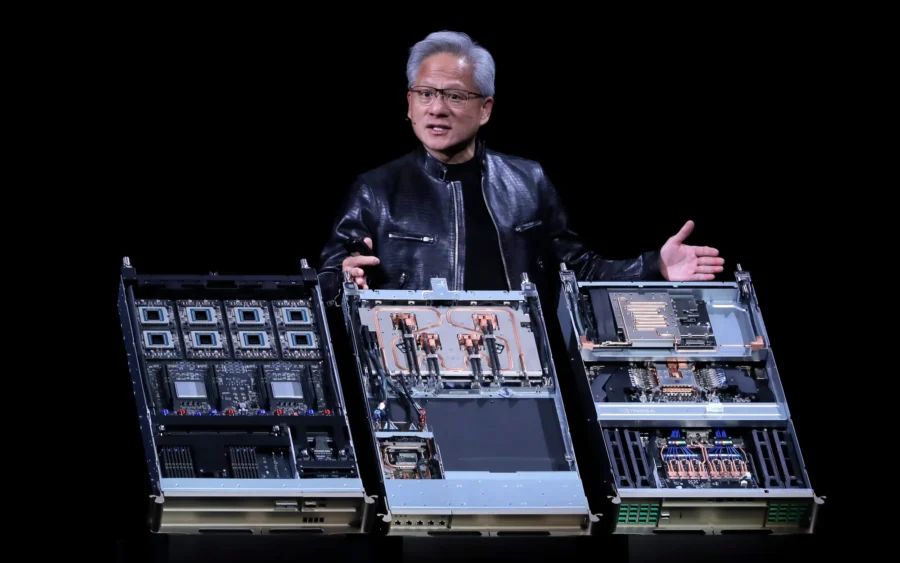
Nvidia, the company whose graphics processing units have become synonymous with the AI revolution, is now setting its sights on a market it has historically left untouched: the personal computer. According to TechCrunch AI, Nvidia is pursuing the $200 billion CPU market by partnering with Microsoft, Dell, and HP to bring AI agent capabilities directly to end-user devices. For UK businesses, the implications of this shift could be far-reaching, touching everything from IT procurement to workforce strategy.
The Rise of the AI Agent PC
The concept of an AI agent PC moves well beyond the “Copilot” features that Microsoft began embedding into Windows in 2023 and 2024. According to TechCrunch AI, Nvidia’s vision involves devices capable of running autonomous AI agents locally — software that can write and execute tasks, manage files, browse the web, and interact with other applications without constant cloud connectivity. The critical distinction is that much of this processing would occur on-device, reducing latency, improving privacy, and lowering ongoing cloud costs.
TechCrunch AI noted that “if Nvidia has cracked a way to bring AI agents easily, safely, and usefully to the masses, it could — and should — be big.” That assessment, whilst cautiously optimistic, points to the genuine transformative potential of bringing agent-grade AI to a standard office workstation.
What This Means for UK IT Procurement
For UK procurement managers and IT directors, Nvidia’s entry into the AI PC space introduces a new dimension to hardware refresh cycles. Historically, the decision to upgrade a fleet of corporate laptops or desktops has been driven by operating system lifecycles or performance degradation. AI capability is now emerging as a third driver, one that could accelerate replacement timelines considerably.
According to TechCrunch AI, the initial wave of AI agent PCs is being manufactured in partnership with Dell and HP — two of the largest enterprise hardware suppliers in the UK market — alongside Microsoft’s Surface line. This means that when UK organisations next negotiate enterprise hardware agreements, AI agent capability will likely feature prominently in vendor pitches. Procurement teams will need to assess not just processor specifications, but the software ecosystem and agent frameworks that sit atop the hardware.
Data Sovereignty and On-Device Processing
One area where UK businesses may find particular value in local AI agent processing is data sovereignty. Under the UK General Data Protection Regulation (UK GDPR) and sector-specific regulations governing industries such as financial services and healthcare, the movement of sensitive data to third-party cloud servers carries significant compliance risk. On-device AI agents, by contrast, can process confidential information without it ever leaving the endpoint.
This is especially pertinent for UK legal firms, NHS trusts, and financial institutions, all of which handle data that is subject to strict residency and processing requirements. If Nvidia’s AI agent PCs deliver on their promise of robust local processing, they could offer a compliance-friendly alternative to purely cloud-based AI deployments.
Workforce and Skills Considerations
The broader workforce implications should not be overlooked. According to TechCrunch AI, the AI agent PC concept envisions individual workers commanding software agents capable of completing complex, multi-step tasks autonomously. For UK employers, this raises questions about role design, output measurement, and the skills required of employees who will manage and supervise AI agents rather than performing tasks manually.
The UK government’s AI skills agenda, outlined in the AI Opportunities Action Plan published in early 2025, emphasised the need to prepare the workforce for human-AI collaboration. Nvidia’s push into the consumer and enterprise PC market represents exactly the kind of development that plan was designed to anticipate. Organisations that begin investing in AI literacy now will be better placed to extract value from AI agent hardware when it arrives on their desks in volume.
A Measured Outlook
It would be premature to predict that AI agent PCs will transform UK business operations overnight. Hardware adoption in enterprise environments is typically measured in years, not months, and the software frameworks needed to deploy reliable agents at scale are still maturing. Nevertheless, Nvidia’s move into this space — backed by three of the most significant hardware partners in the industry — marks a meaningful inflection point. UK business leaders would be well advised to begin evaluating what AI agent workflows could look like within their organisations before the hardware arrives on the market at scale.