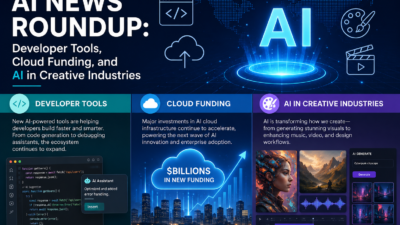
This week’s AI landscape has been defined by legal firsts, significant venture capital activity, and a new model release from Anthropic. Here is a summary of the key stories shaping the industry as of 2 June 2026.
Florida Sues OpenAI and Sam Altman Over Violent Incidents
The state of Florida has filed what is being described as a first-of-its-kind lawsuit against OpenAI and its chief executive Sam Altman, according to TechCrunch AI. The legal action relates in part to a shooting at Florida State University and the alleged role of ChatGPT in the incident. According to TechCrunch AI, the lawsuit represents a significant escalation in legal scrutiny of AI companies, moving beyond questions of intellectual property and bias to raise issues of direct liability for real-world harm.
For UK observers, the case carries particular relevance. The Online Safety Act 2023 already places obligations on platforms to protect users from harmful content, and a successful lawsuit in the United States could embolden campaigners and regulators in Britain to pursue similar avenues of accountability. UK legal experts are likely to watch the Florida proceedings closely as a potential precedent-setter for AI liability frameworks on this side of the Atlantic.
Railway Raises $100 Million to Challenge AWS With AI-Native Cloud
San Francisco-based cloud platform Railway has secured $100 million in a Series B funding round, according to VentureBeat AI. The company, which has attracted two million developers without spending a single dollar on marketing according to VentureBeat AI, is positioning itself as an AI-native alternative to established hyperscalers such as Amazon Web Services, Google Cloud, and Microsoft Azure.
Railway’s proposition — that legacy cloud infrastructure was not designed with AI workloads in mind — resonates with a growing cohort of UK developers and startups who find the complexity and cost of major cloud providers prohibitive. The funding round is likely to accelerate Railway’s international expansion, and the UK’s vibrant developer community may represent an attractive early market. According to VentureBeat AI, the company’s organic growth to date suggests strong product-market fit, a factor that will reassure UK businesses evaluating alternative cloud providers.
Anthropic Releases Claude Opus 4.8
Anthropic has released Claude Opus 4.8, an incremental upgrade to Claude Opus 4.7, according to AI News. The updated model brings improved performance across coding, agentic tasks, reasoning, and knowledge work, according to AI News. The release is notable in the context of the intensifying competition between Anthropic, OpenAI, and Google across the enterprise AI market.
For UK enterprises currently evaluating large language model providers, Claude Opus 4.8’s improvements in agentic and reasoning capabilities are particularly relevant given the growing interest in deploying AI agents for complex, multi-step business processes. Anthropic has made data privacy and constitutional AI principles central to its commercial proposition, factors that resonate with UK organisations operating under stringent data protection obligations.
The Cost of AI Coding Tools Comes Under Scrutiny
A growing debate about the cost of AI-assisted coding tools has been highlighted this week, with VentureBeat AI reporting that Claude Code, Anthropic’s terminal-based AI coding agent, can cost users up to $200 per month. According to VentureBeat AI, open-source alternative Goose offers comparable functionality at no cost, prompting developers to question whether premium pricing is justified for commercial coding agents.
For UK software development teams and technology startups operating under tight budgets, the emergence of capable open-source alternatives to paid AI coding tools is a welcome development. However, enterprise buyers are likely to weigh factors beyond price, including support, security guarantees, and integration with existing development pipelines, before migrating away from commercial offerings. According to VentureBeat AI, the cost debate reflects broader tensions in the AI industry between accessibility and monetisation — a balance that is far from resolved.