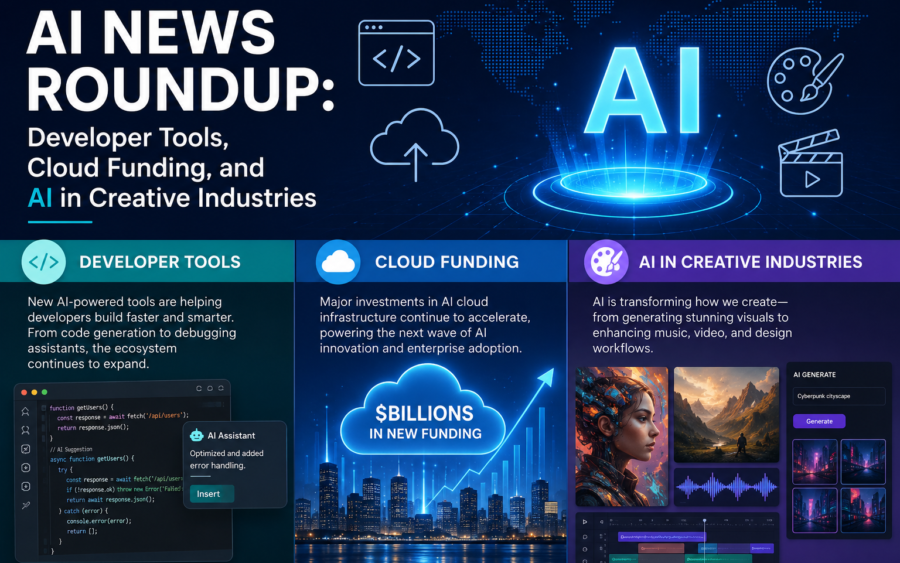
This week’s roundup covers four stories that, taken together, paint a picture of an AI landscape in rapid transition: developer tooling is growing more sophisticated, cloud infrastructure competition is intensifying, the cost of AI-assisted coding is becoming a genuine concern, and even the most tradition-minded voices in Hollywood are finding uses for the technology.
Microsoft Releases Open Source Framework for AI Behaviour Testing
Microsoft has unveiled a new open source tool designed to simplify the process of testing AI model behaviour, a capability that has become increasingly critical as organisations deploy AI systems in production environments. According to TechCrunch, the tool — called Adaptive Spec-driven Scoring for Evaluation and Regression Testing, or ASSERT — allows developers to generate AI evaluation frameworks using plain text descriptions rather than requiring them to write complex evaluation code from scratch.
According to TechCrunch, ASSERT is an open source framework, meaning UK developers and organisations can adopt and adapt it without licensing costs. For British software teams integrating AI capabilities into products and services — a cohort that has grown substantially over the past two years — the tool addresses a persistent challenge: ensuring that AI models behave consistently and safely as they are updated or fine-tuned. The release reflects a broader industry recognition that evaluation and testing infrastructure must mature alongside model capabilities themselves.
Railway Raises $100 Million to Build AI-Native Cloud Infrastructure
Cloud platform Railway has closed a $100 million Series B funding round as it moves to position itself as an AI-native alternative to established hyperscalers. According to VentureBeat, the San Francisco-based company has attracted two million developers to its platform without spending a single dollar on marketing — a remarkable feat of organic growth that has clearly caught the attention of investors.
According to VentureBeat, Railway intends to use the funding to expand its infrastructure and challenge AWS in the AI workload space. For UK developers and startups, the emergence of credible AI-native cloud alternatives to Amazon, Google, and Microsoft is a development worth monitoring, particularly as compute costs remain one of the most significant barriers to building and scaling AI products. Railway’s developer-first approach may hold particular appeal for the UK’s substantial independent software developer community.
AI Coding Tools: The Growing Cost Debate
The financial cost of AI coding assistants is emerging as a meaningful concern for individual developers and engineering teams. According to VentureBeat, Claude Code — Anthropic’s terminal-based AI agent capable of writing, debugging, and deploying code autonomously — can cost users up to $200 (approximately £158) per month, a price point that places it out of reach for many independent developers and smaller studios.
According to VentureBeat, the open source tool Goose offers comparable autonomous coding capabilities at no cost, raising questions about the long-term pricing power of premium AI coding tools. The debate is directly relevant to UK developers, particularly given the simultaneous news this week that GitHub Copilot has moved to token-based billing — according to AI News, many users are already reporting effective price increases under the new model. Together, these stories suggest that the economics of AI-assisted software development are becoming more complex and, for high-volume users, considerably more expensive.
Martin Scorsese Embraces AI for Storyboarding
In an unexpected development from the world of film, legendary director Martin Scorsese has become the latest — and perhaps most surprising — Hollywood figure to publicly engage with artificial intelligence in his creative process. According to TechCrunch, Scorsese is using AI technology specifically for storyboarding, the pre-production process by which filmmakers visualise scenes before shooting begins.
The news carries particular resonance given Scorsese’s reputation as a custodian of traditional cinematic craft and his vocal past criticisms of digital homogenisation in filmmaking. According to TechCrunch, Scorsese’s adoption is explicitly limited to the storyboarding stage, suggesting a model in which AI augments rather than replaces human creative decision-making. For the UK’s television and film production sector — one of the largest in Europe, centred on facilities including Pinewood, Shepperton, and the BBC’s studios — the endorsement from a director of Scorsese’s stature may help shift internal conversations about where AI tools can be productively integrated without threatening creative integrity or employment.